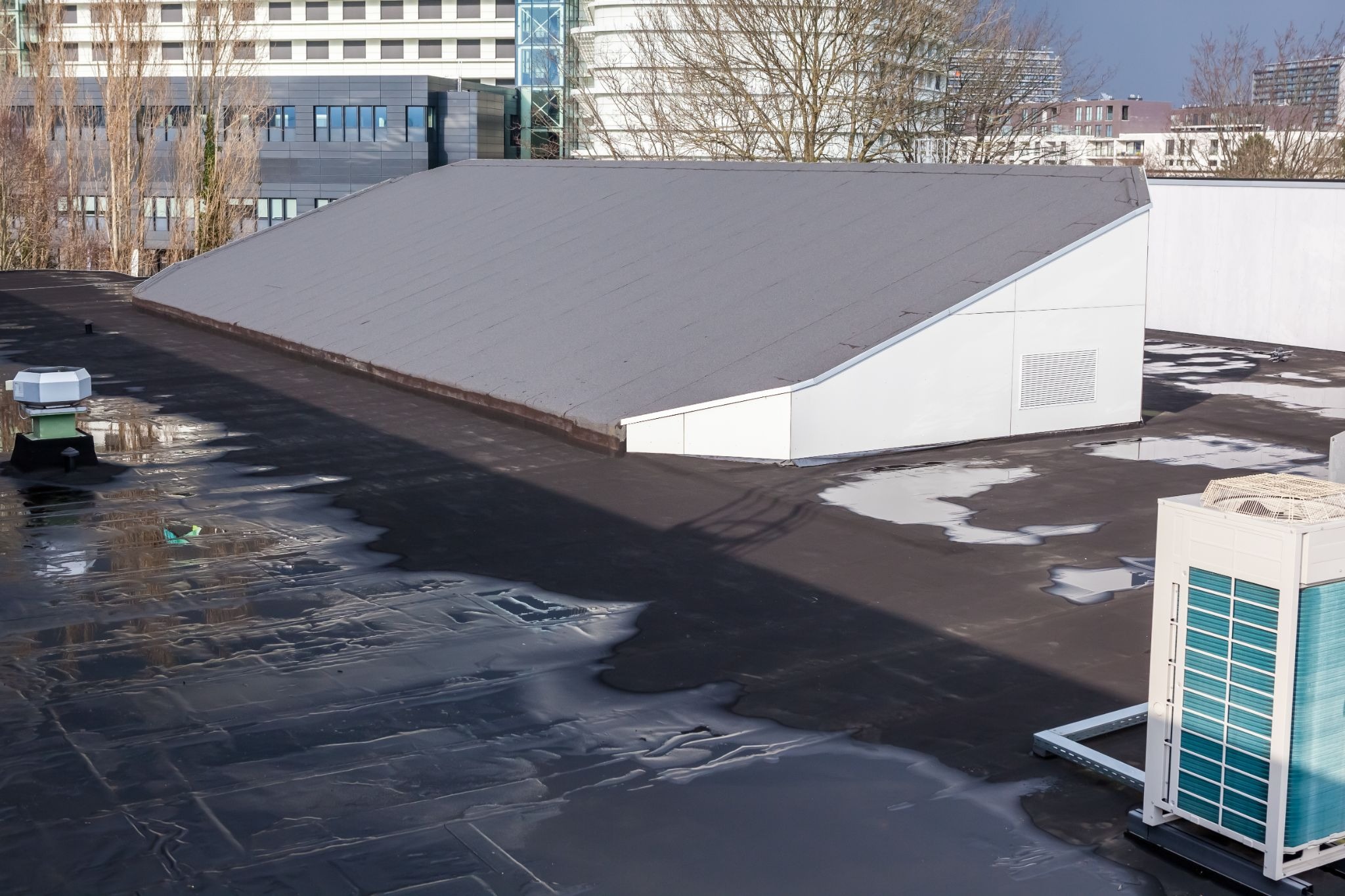
Florida’s rainy season brings daily heavy downpours, particularly in Central Florida, where commercial properties with flat or low-slope roofs are commonplace. These frequent summer storms are more than just a source of inconvenience, they also present a significant challenge for the drainage systems on commercial roofs. Standing water, commonly referred to as ponding, can quickly reveal weaknesses in drainage and accelerate roof degradation. For business owners, understanding the causes, early warning signs, and solutions to ponding water is crucial for avoiding interior damage and costly roof replacement.
What Causes Ponding Water on Commercial Roofs?
Commercial flat roofs made of TPO, PVC, or roof coatings are designed for durability, but not for holding water. Ponding usually occurs due to a combination of factors:
-
Insufficient roof slope or poor design that allows depressions where water collects
-
Blocked or inadequate roof drains, scuppers, or gutters clogged by debris, leaves, or organic matter
-
Deterioration of insulation beneath the membrane, which can cause the roof surface to sag
-
Improperly installed or aging roofing materials that lose their shape or flexibility
In Central Florida, these issues are amplified by the volume and frequency of rainfall. Roofs that may seem watertight during drier months are far more vulnerable during the rainy season.
How Ponding Water Impacts TPO, PVC, and Coated Roof Systems
While modern commercial roofing systems are built for resilience, prolonged standing water will accelerate wear and tear. When water remains for more than 48 hours, it begins to:
-
Break down membrane seams and increase the risk of leaks
-
Promote mold, algae growth, and attract insects
-
Speed up the degradation of reflective coatings, reducing energy efficiency
-
Add excessive weight that may stress the building structure over time
TPO and PVC roofs are especially prone to seam separation if standing water persists, while coated systems may develop blisters or cracks that allow water to penetrate, resulting in unseen damage to the insulation layers and underlying structure.
Spotting the Early Warning Signs of Ponding Issues
The first step in prevention is to recognize problem areas before obvious leaks occur. Watch for these indicators:
-
Visible water pools, especially after a rainstorm
-
Discoloration, staining, or “mud rings” on the roof surface marking previous ponding areas
-
Soft spots underfoot on the roof that may indicate deteriorated insulation
-
Clogged drains or scuppers
-
Algae, mildew, or plant growth in standing water zones
Early intervention can prevent further damage and help prolong the lifespan of your commercial roofing system.
Proven Solutions and Repairs for Commercial Roof Drainage
There are several effective repairs and upgrades that a professional commercial roofing company can provide to eliminate ponding and improve drainage, such as:
-
Installing additional roof drains, scuppers, or tapered insulation to enhance water flow
-
Cleaning, resizing, or reconfiguring gutters and downspouts to handle higher volumes
-
Repairing or re-pitching areas where water collects, including replacing compromised insulation or substrates
-
Applying high-quality roof coatings designed for ponding resistance on low-slope roofs
Engaging a local team that specializes in commercial roof repairs, roof coatings, and flat roofing services means solutions are tailored to the unique climate and architectural styles in Central Florida.
Protect Your Investment – Contact Cobb Roofing Inc for a Drainage Inspection Today
As a business owner in Avon Park, FL, taking action before the rainy season peaks can save thousands in interior damage and premature roof replacement. Don’t wait until you see water stains on the ceiling or inventory damage from leaks. Contact Cobb Roofing Inc today for a roof drainage inspection and quick, professional repairs. Call (863) 453-6595 or fill out our online form to schedule your assessment and keep your business protected all summer long.